
PLANT4BORNEOELEPHANTS
- 1stopborneowildlife website
- Jan 8, 2019
- 6 min read

Updated: Jun 23, 2025

‘WHILST SITTING IN A TAWAU PLANTATION’S COUNTRYSIDE LODGE’
A word of explanation for this title: In August 2018, I was staying in the spacious visitors’ accommodation of a Tawau plantation whilst on a trip organised by IStopBorneoWildlife, a Sabah-based NGO. I was there as part of a conservation project developed between the plantation and the local NGO that has two aims: to promote wild elephant spotting for tourism and to create a wildlife corridor of forest trees to connect two neighbouring wildlife reserves.
The background
In early 2018, 1StopBorneoWildlife established that a herd of approximately 80 wild elephants was roaming within the plantation of softwood trees, for example Acacia, and the local management there were taking the enlightened approach of seeing the elephants as a potential asset rather than a threat to their staff and trees. In addition, there already existed, in outline at least, a 13.89-kilometre wildlife corridor within the plantation that was intended to link the two nearby forest reserves, Ulu Kalumpang and Ulu Segama. And so the partnership was born: Plant4BorneoElephants.
Now the plantation provides overnight accommodation, transport for observing the elephants and the knowledgeable staff to track them. 1StopBorneoWildlife provides the visitors in conjunction with a local tour operator, Adventure Alternative Borneo,but also ensures close liaison with the relevant plantation staff. However, there is another component to this conservation partnership: the development of the wildlife corridor in which the saplings of local native trees are cultivated using the plantation’s expertise whilst the visitors travel to the corridor and plant them.
A typical visit, therefore, involves open-topped vehicle rides along the plantation roads to track and spot the elephants. Sightings cannot be guaranteed but local knowledge and a coordinated network of ‘spotters’ from among the plantation staff, providing ‘real time’ information to the driver, considerably increases the likelihood of seeing these surprisingly elusive animals. After an evening meal, a night’s sleep and breakfast, visitors should now be ready to select tree seedlings from a large range of species cultivated in the nearby nursery. These may be wild fruit such as durian or figs, or perhaps one of a number of dipterocarp, for example Shorea species, or non-dipterocarp species. Armed with spades and under the direction of plantation staff, the visitors are driven to a designated area in the corridor where positions for planting have already been mapped out. The input of local people within the plantation should not be underestimated in ensuring proper and planned planting is carried out. By actually planting tree seedlings, visitors certainly gain insight into the challenges of practical conservation!
The elephants
The two components of the project both address issues that involve the interaction between elephants and humans. The elephant in question is Elephas maximus borneensis, the Borneo Pygmy Elephant of which approximately only 1,500 remain in the wild, mostly in Sabah alone. In other words, it is a critically endangered species and is a genetically distinct subspecies of the Asian elephant which in total has a maximum wild population of about 50,000 surviving in Asia.
The pygmy elephant is a species of Bornean lowlands and valleys which is, sadly, the habitat typically exploited by humans for logging, palm oil cultivation and other forestry activities such as softwood cultivation. It is a herbivore, feeding on fruits, grasses and some trees such as palms. A herd may need an area of lowland forest of perhaps 300 square kilometres for feeding and to maintain breeding relationships.
These features of its biology mean that conflict with the expanding human population in Borneo is inevitable. It is now confined to the NE tip of Kalimantan and southern and eastern parts of Sabah; it has been eliminated completely from Sarawak. The elephant/human conflict has become sharper as vast areas of rainforest have been claimed for palm oil cultivation in the last 30 years. This expansion of palm oil cultivation not only reduced the elephants’ natural habitat but has also had the effect of isolating areas of surviving primary forest; both of these features of forest destruction were bound to increase contact and conflict with humans. For more information see the following website:
The trees
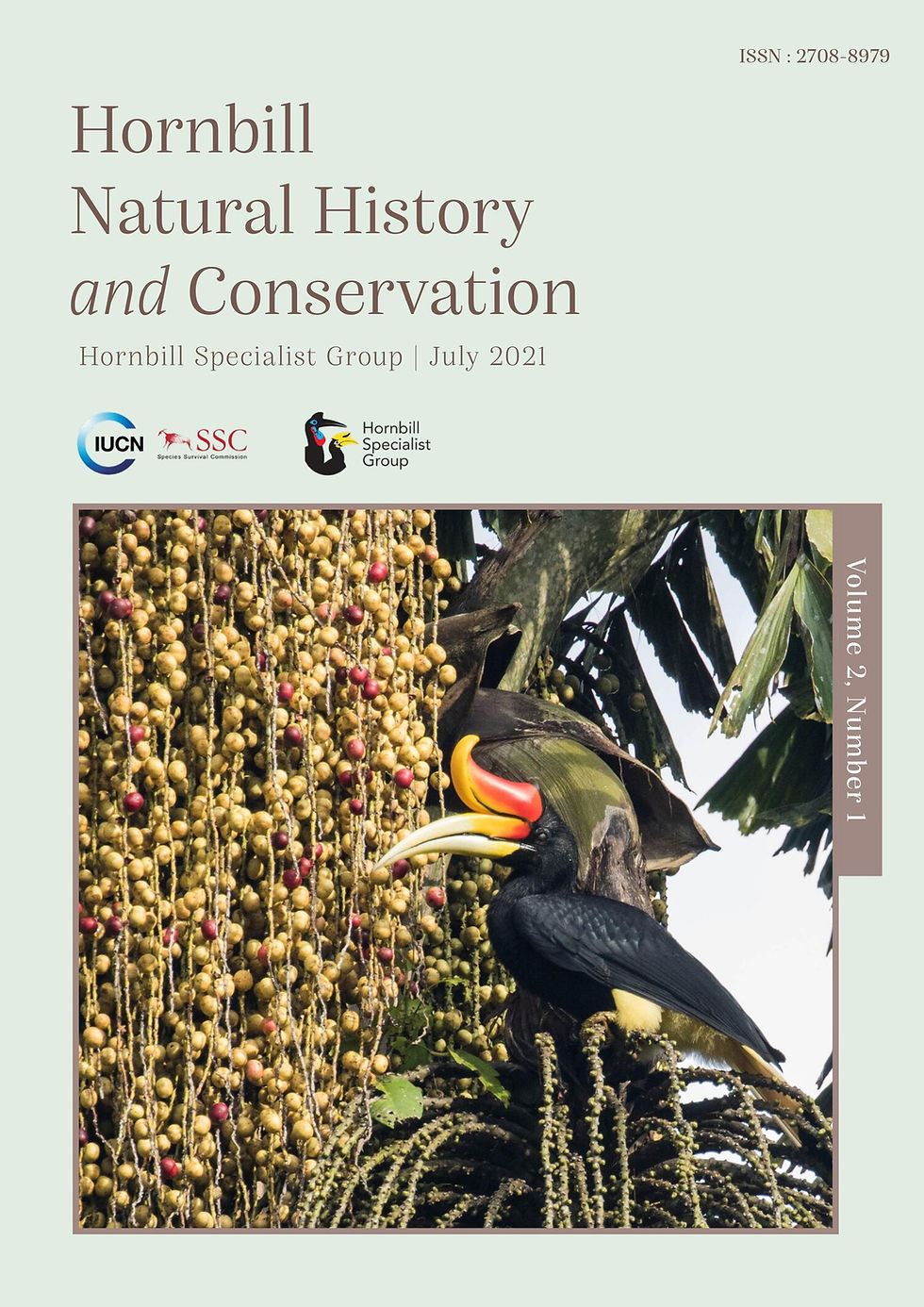
A visitor to the plantation will immediately be struck by the large acreage of softwood trees with their uniformity and lack of diversity of plants and animals they support. The plantations are grown to produce the maximum yield of wood as rapidly as possible before felling and so a monoculture is the result. Although the trees are fast growing and prevent the growth of all but a few plant species in their shade, it does seem that elephants are able to feed on fast growing plants such as grasses within and on the borders of these plantations. There may also be other species present after recent reported sightings of 3 hornbill species, notably the rhinoceros hornbill, and other mammals such as red leaf monkeys, sambar deer and leopard cats.
In contrast, the creation of the 13.89- kilometre wildlife corridor, with a total area of 1,067 hectares, demands a very different planting strategy so as to develop the diversity that characterises the primary forest protected in the two reserves being linked. There is no quick fix for this, long term management is required. A whole range of tree seedlings must be planted and, since these are slower growing, they must be protected for decades as they and the ecosystem they support become established.
The partnership
The history of the recent decline of so many animal species in Borneo clearly demonstrates the need for solutions to prevent their extinctions. The need to educate people, not just in the palm oil producing countries of Indonesia and Malaysia but throughout the world, about rainforests, their biodiversity and destruction is paramount. One way of doing this is through conservation tourism that has the additional, potential benefit of raising money for further conservation. The role of local tour operators and conservation NGOs such as those involved here, is important for tourism but they may also be vital in the education of people of all ages and backgrounds in the issues of conservation. It is pleasing to hear that Datuk Christina Liew, the State Minister of Tourism, Culture and Environment praising IStopBorneo Wildlife for initiating this elephant conservation project that demonstrates how Sabah’s elephants can be an asset for the State and not a liability as so often reported. As reported in TheStar Online (November 24th 2018) she said ’this NGO, founded in 2016, came up with a great idea of working with oil palm plantations for its initiative known as Plant4BorneoElephants.’
For more information on 1StopBorneoWildlife go to: https://www.1stopborneo.org/
Those involved in agricultural businesses, such as the company involved here, must also acknowledge wider responsibilities beyond being profitable. To be fair, for example with this project, this plantation, at least, seems to be prepared to do just that. The company’s timber concession belt in Tawau is part of a more substantial area of timber and palm oil cultivation totalling upwards of 40,000 hectares and so this project is being developed in just a small part of this. Long may it continue its support.
The future: educational and tourism potential
Such an initiative should benefit all parties: as Datuk Christina Liew has noted: ‘ 1StopBorneo Wildlife’s undertaking has boosted the local Tawau economy by encouraging tour operators to take tourists to the plantation for elephant viewing and planting seedlings.’ At the same time, the need for new jobs such as drivers and community guides has boosted job opportunities for local people. This partnership can be sustainable and relevant: the elephants need to move out from the plantation and the development of the wildlife corridor will help to achieve this. Visitors are active contributors to the partnership when they plant seedlings; they gain an insight into the challenges of conservation, rather than merely being passive observers. However, the enormous educational potential of such a partnership should not be overlooked: both school and university students will benefit from visits, both providing the energy for tree planting whilst also observing elephants in the wild.
It offers a model for other plantations in Sabah to explain their approaches to balancing conservation with the core business of large scale cultivation of commercial crops. It is an important opportunity for plantation owners to contribute to conservation.
The vulnerability of mega fauna such as the Borneo pygmy elephant to the consequences of human contact is clearly illustrated by the reports of so many elephant deaths in Sabah this year. This new conservation project in this small part of Sabah offers a way forward and coincides with the more positive news, that in this changing political era, local bodies may finally be prioritising elephant conservation.
References
Lee, S. (2018) Jumbo boost for Sabah tourism The Star Online November 24th 2018

Bài viết dễ theo dõi, giải thích mạch lạc về AST nên mình đọc cái hiểu liền, cảm ơn bạn đã chia sẻ. Mình thì hay theo dõi thống kê XSMB mỗi ngày, muốn tra nhanh nên tự gom lại thành một trang tổng hợp cho tiện xem lại. Ai cũng quan tâm số liệu cập nhật theo ngày thì ghé qua https://artconomy.com/profile/Soicauxsmbpro/about/
Trước đây mình loay hoay khá lâu mới chọn được addon cho Minecraft PE rồi phối với resource pack cho nhìn hợp mắt trước khi cài. Thường mình ưu tiên mấy shader nhẹ vì máy không mạnh, sau đó thử thêm vài map lạ để thế giới đỡ nhàm. Mình cũng hay xem nhận xét trong cộng đồng, nhất là các addon kiểu furniture hay alien invasion, có chấm sao rõ ràng thì dễ quyết hơn và chơi đỡ lỗi vặt. Nói chung mình không tin mấy lời truyền miệng, cứ chọn nơi nào cập nhật đều và kiểm tra thông tin nhanh. thuvienmc Nếu cần chỗ lấy addon Minecraft PE, resource pack và map miễn phí thì mình hay…
Mình thường lướt tin về bitcoin rồi xem thêm vài góc nhìn phân tích kỹ thuật để nắm nhịp tăng giảm của thị trường crypto mỗi ngày. Khi có thêm mấy bài dự đoán giá kèm cập nhật altcoin, memecoin thì mình dễ hình dung tổng quan hơn, nhất là trước lúc quyết định vào lệnh hay tạm đứng ngoài. Tầm giữa ngày mình hay ghé https://tapchibitcoin.io/ để đọc nhanh vài tin, sau đó tự mở chart ra đối chiếu lại cho chắc. Thỉnh thoảng mình cũng xem các chia sẻ trong cộng đồng, nhiều người nhắc nên tham khảo thêm phân tích on-chain và chọn lọc tin vắn vì thường bám sát dữ liệu hơn cảm tính. Với các…
Mình chơi xổ số kiểu giải trí là chính, nên thường chỉ xem kết quả cho đỡ buồn chứ không đặt nặng chuyện đổi đời. Trước đây nghe bạn bè bàn tán về mấy “cầu” này nọ, mình cũng thử để ý xem có gì hay ho không. Theo dõi một thời gian thì đúng là có vài chi tiết lặp lại khiến mình chú ý, nhưng mình vẫn tự nhắc phải tỉnh táo. Mỗi lần đọc nhận định ở đâu đó, mình hay ghi lại vài ý ngắn rồi so với kết quả để xem có phải mình đang tự hợp lý hóa không. Trúng lặt vặt thì vui, còn sai thì coi như trải nghiệm. Gần đây mình…
Mình không phải kiểu đánh theo hứng cho vui, nhưng cũng chẳng đặt nặng chuyện hên xui. Thường mình hay ngồi xem lại vài kỳ gần nhất, ghi chú nhanh những nhóm số hay lặp rồi chọn ra mấy con thấy hợp mắt. Có bữa trúng chút thì cười cả ngày, nhưng cũng nhiều lúc trật hết nên mình xem như giải trí nhẹ nhàng sau giờ làm thôi. Mình cũng hay đọc mấy bài kiểu dự đoán xổ số miền bắc, miễn là đọc tỉnh táo thì cũng thêm góc nhìn, nhất là phần nói về cầu với thống kê. Quan trọng nhất vẫn là biết điểm dừng, chứ ham quá là dễ mệt. Thỉnh thoảng mình còn bàn…